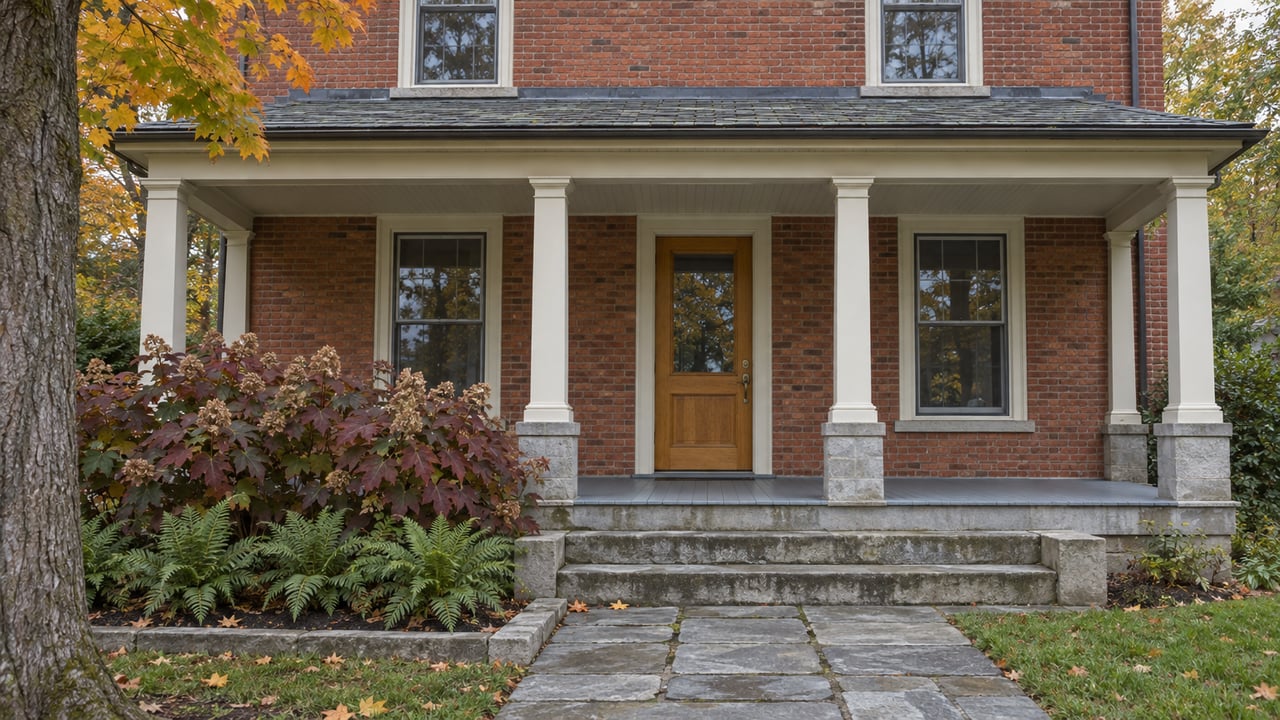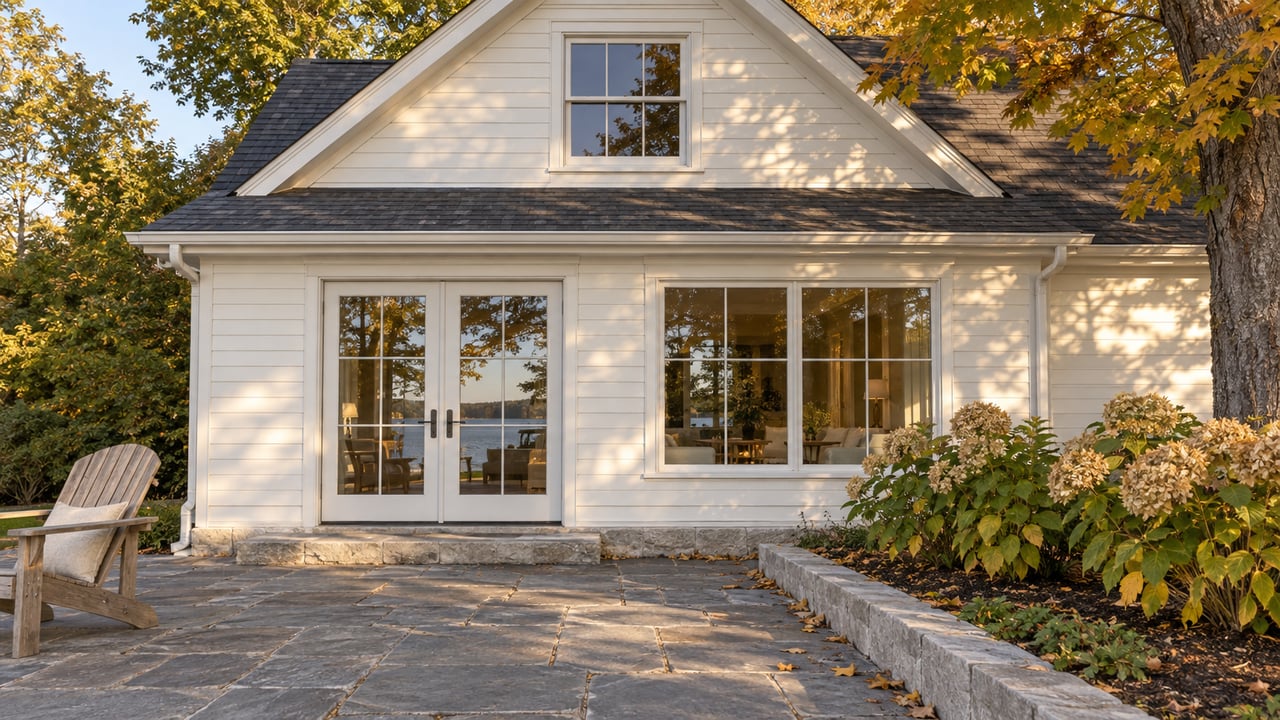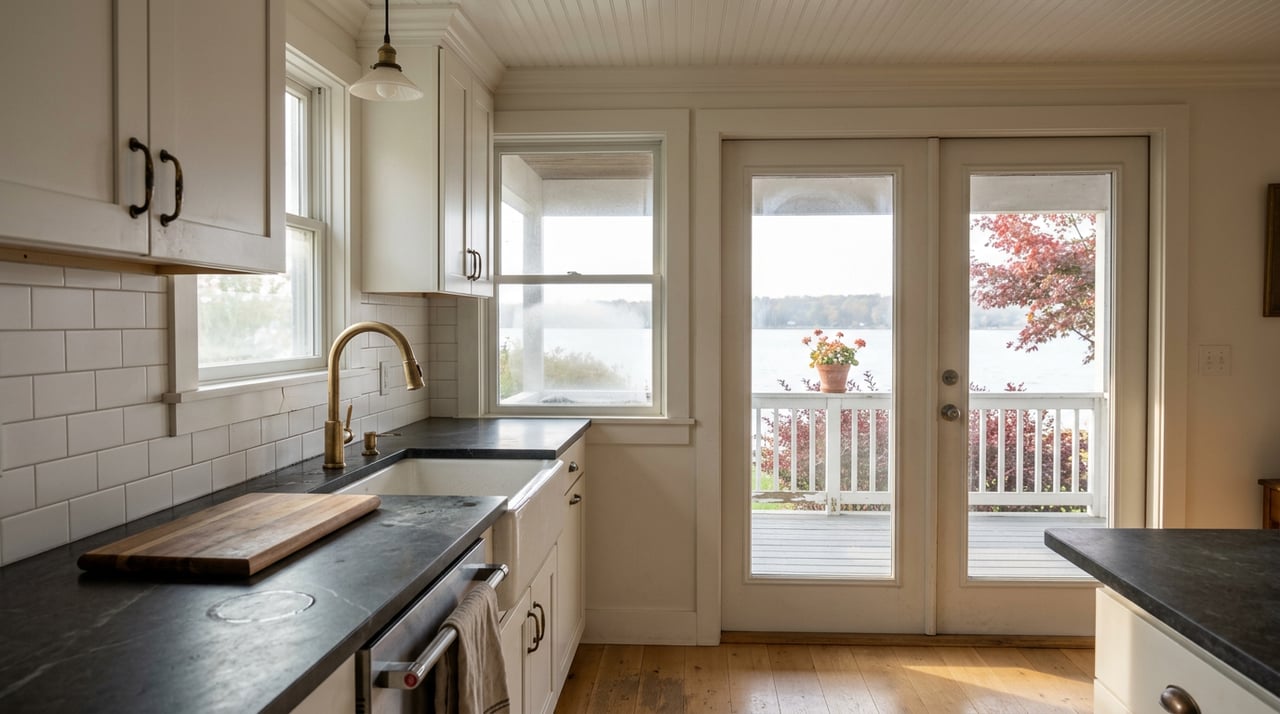
Picture two docks on Seneca Lake, one at the northern tip in Geneva and one on the western shore in Romulus. Both owners are getting ready to list this fall. Both have private septic systems within a stone's throw of the water. Only one of them is legally required to have that system inspected before the sale can close, and it has nothing to do with the age of the tank, the size of the house, or how close either property sits to the shoreline. It comes down entirely to which county holds the deed records: Geneva sits in Ontario County, Romulus sits in Seneca County, and only one of those counties wrote this particular rule.
That distinction is the part of Seneca Lake's regulatory picture that rarely makes it into a listing conversation, and it matters more than most sellers realize once an offer is on the table.
A County Law, Not a Lake Law
Seneca County's Watershed Protection Law, adopted as Local Law 7-2021 and in effect since April 1, 2022, requires inspection of private septic systems on any parcel within 250 feet of the mean high-water mark of Cayuga Lake, Seneca Lake, or the Cayuga-Seneca Canal system. The law is triggered automatically any time a covered property changes hands, regardless of whether a buyer's own inspector ever asks about the septic system.
The part that catches people off guard is jurisdiction. Seneca Lake itself stretches across four counties: Schuyler, Seneca, Yates, and Ontario. The watershed law is a Seneca County ordinance passed by the Seneca County Board of Supervisors, and it only reaches shoreline sitting inside Seneca County's boundary. A property in Geneva, at the lake's northern tip in Ontario County, isn't subject to this particular law at all, even though it's touching the same water as a Seneca County listing a few miles south. Two houses can share a view of the same sunset and answer to completely different rulebooks.
The Rotation Nobody Reads Until They're Selling
The sale trigger is only half of the law. The other half is a standing inspection schedule that moves through Seneca County's towns two at a time, on a five-year rotation, whether or not anyone is buying or selling:
| Rotation Year | Towns Inspected |
|---|---|
| 2022 | Fayette, Ovid |
| 2023 | Lodi, Seneca Falls |
| 2024 | Covert, Waterloo |
| 2025 | Varick, Romulus |
| 2026 | Junius, Tyre |
That means a property in Varick or Romulus already went through a countywide inspection cycle last year, separate from any sale. A property in Junius or Tyre is in the middle of one right now. If your town isn't due again until 2027 or later, and you're not selling, you may not hear from the county at all this year.
The weighted vote to adopt passed 535 to 157, with supervisors from Junius, Covert, Romulus, and Tyre casting the opposing votes. The rotation lists Covert in 2024, Romulus in 2025, and Junius and Tyre in 2026.
If your shoreline sits in Seneca County, the question isn't whether an inspection happens. It's whether it happens on the county's calendar or on your buyer's timeline.
What a Failed Inspection Actually Costs
A septic system that fails inspection doesn't just delay closing. It changes the negotiation. Replacement costs for a failed system on waterfront soil, where conventional drain fields are harder to site near a shoreline, commonly run past $20,000 once permitting and excavation are included. That's a number that shows up in a repair credit request or a price reduction, not a footnote.
The scope of any required work depends on the applicable local records and permits, so confirm those details with the appropriate local health department before estimating the seller's exposure.
The Money That Might Help, If Your Address Qualifies
There's a piece of current news that could change the math for owners on a failing system. Seneca County's Board of Supervisors was scheduled in late July 2026 to consider accepting $300,000 in septic system replacement funding, alongside a separate sewer grant application worth more than $1 million. Eligible areas currently include specified locations around Cayuga Lake, Seneca Lake, and the Seneca River, also known as the Cayuga-Seneca Canal. The funding term hadn't been finalized as of that meeting but was expected to begin sometime in 2026 and run up to three years.
Nothing here is guaranteed yet, and eligibility is described as location-specific rather than countywide. If you own a shoreline property with an aging system, this is worth a direct call to the county rather than an assumption either way.
The Rental Rule That Adds a Second Line
Septic isn't the only place where Seneca Lake's rules change depending on which side of a boundary you're standing on. If part of your plan for a purchase includes short-term rental income, the Town of Geneva's short-term rental law adds its own layer. Adopted under Local Law 7-2022 and effective in December 2022, the ordinance requires a short-term rental to be owner-occupied or "owner-supervised," meaning at least one owner in title occupies a dwelling on the same lot, or one immediately contiguous or across the street, for at least seven months of the calendar year. That standard only applies to permits issued after the law took effect. Rentals already permitted before that date were grandfathered in.
To complicate matters, the City of Geneva and the Town of Geneva are separate jurisdictions with separate short-term rental ordinances, and the City's version includes its own registration process, a requirement that a local contact respond to complaints within 45 minutes, and permits that expire on December 31 of the second year. A buyer comparing two properties a few blocks apart in Geneva could be looking at two entirely different rental rulebooks depending on which side of the city line the parcel falls on.
Seneca Falls adds one more transaction-specific wrinkle worth knowing if a rental income property is part of the plan. That town's short-term rental permit is tied to the specific owner and property together, not just the address. When a licensed short-term rental sells, the new owner has to file their own application rather than inheriting the seller's permit. An existing rental history doesn't transfer with the deed.
What This Means If You're Listing This Year
None of this is a reason to avoid Seneca Lake. It's a reason to find out early which rules actually apply to your specific address instead of assuming the lake behaves the same way from one shoreline to the next. Before listing, it's worth confirming which county and town your parcel sits in, whether your septic system has a current O&M permit on file, and whether your town's rotation year has already come and gone. If a short-term rental is part of the value story, confirming permit status and transferability before you price the listing avoids a surprise during due diligence.
A Short FAQ
Does the watershed law cover Cayuga Lake too? Yes. The same Seneca County ordinance covers private septic systems within 250 feet of Cayuga Lake's shoreline and the connecting canal system, not just Seneca Lake.
If my town was already inspected in a past rotation year, does selling this year trigger another inspection? The sale trigger and the five-year rotation are described in the law as separate mechanisms. If you're planning to sell, confirm directly with the Seneca County Health Department whether your prior rotation inspection satisfies the sale requirement or whether a new one is needed.
Is the Geneva rental ownership rule retroactive? No. It applies only to short-term rental permits issued after the law took effect in December 2022. Rentals permitted before that date were not required to meet the owner-occupied or owner-supervised standard.
If you're weighing a sale on Seneca Lake and want to know exactly which rules apply to your specific shoreline before you price it, Nick Davoli has spent more than twenty years working these exact boundaries, town by town. Start with a current home valuation, or Let's Connect directly to talk through your address specifically.
This article is general information, not legal, tax or financial advice. Consult a qualified professional about your situation.